


resources
Bill Gates' Smart City in Arizona: A Glimpse into Belmont's Future
15 Apr 2026

So, Bill Gates is spearheading the development of an entirely new urban center in the Arizona desert. This ambitious undertaking, known as Belmont, isn't just any city – it's meticulously designed to be a 'smart city' from its very inception. Imagine pervasive, super-fast internet, self-driving vehicles navigating seamlessly, and all energy derived from clean, renewable sources. It sounds quite futuristic, doesn't it? This whole project represents a significant undertaking, aiming to serve as a real-world proving ground for what future cities could truly embody. We're talking about a monumental experiment in urban living, unfolding right in the heart of the Arizona desert.
Key Takeaways
- Bill Gates is spearheading the development of Belmont, a smart city in Arizona, with a profound emphasis on advanced technology.
- The city's design envisions pervasive high-speed internet, comprehensive infrastructure for autonomous vehicles, and robust renewable energy systems.
- Arizona provides distinct advantages, including expansive open land and a supportive environment conducive to testing groundbreaking technologies, making it an ideal location.
- Belmont is poised to become a blueprint for future urban development, directly addressing common issues prevalent in modern metropolises.
- The project commences with substantial land acquisition and a phased development strategy, all aimed at cultivating a technologically integrated community.
Bill Gates' Smart City Arizona: The Vision of Belmont
A New Urban Center in the Desert
Picture this: a brand-new city rising majestically from the Arizona desert, a place conceived and constructed from the ground up with tomorrow's imperatives firmly in mind. That's the fundamental premise behind Belmont, Bill Gates' ambitious project. It transcends the mere construction of houses and roads; it's about forging an entirely novel form of community. This is a compelling vision for a city where technology isn't merely an add-on, but the very foundation of its existence. Imagine an environment where mobility is revolutionized, where energy is impeccably clean, and where information flows freely and rapidly—a truly bold plan to rethink urban living within a vast, open landscape.
Pioneering Technological Advancement
Belmont is being meticulously designed as a crucible for innovation, a hub for new technologies. The overarching goal is to seamlessly incorporate cutting-edge elements such as ubiquitous super-fast internet, integrated self-driving vehicles, and sophisticated smart energy systems right from the outset. This isn't about retrofitting outdated ideas onto a new locale; it's about building a city that is fundamentally intelligent. Developers are diligently exploring how these diverse technologies can synergize to make daily life smoother and markedly more efficient for the future inhabitants and workforce. In essence, it's akin to a living laboratory for the future of urban environments.
A Living Laboratory for Urban Innovation
Precisely because Belmont is being conceived de novo—built entirely from scratch—it possesses the unparalleled potential to serve as a unique experimental arena. Developers gain the distinct advantage of experimenting with novel ideas in city planning, transportation, and resource management in ways that are profoundly challenging to achieve within the confines of existing, mature urban centers. This pioneering approach allows for a far more integrated system, where disparate technologies can communicate and collaborate effectively. It truly is a singular opportunity to discern optimal strategies when presented with a clean canvas and a fervent focus on innovation. The hope is that the insights gleaned here could significantly influence how cities are constructed and managed worldwide.
The core concept is to create a city that is not only technologically advanced but also inherently sustainable and meticulously designed to genuinely improve the quality of life for its residents. It's a long-term project fraught with myriad complexities.
Here are some of the key technological areas attracting significant focus:
- Connectivity: High-speed internet will be a fundamental prerequisite, seamlessly connecting everything and everyone.
- Transportation: Autonomous vehicles are planned to be an integral component of how people navigate the city.
- Energy: Advanced renewable energy systems, likely emphasizing solar power, are slated to energize the urban fabric.
- Water Management: Intelligent systems are paramount for conserving and managing water resources effectively within this arid climate.
The Genesis of Belmont: A Groundbreaking Initiative
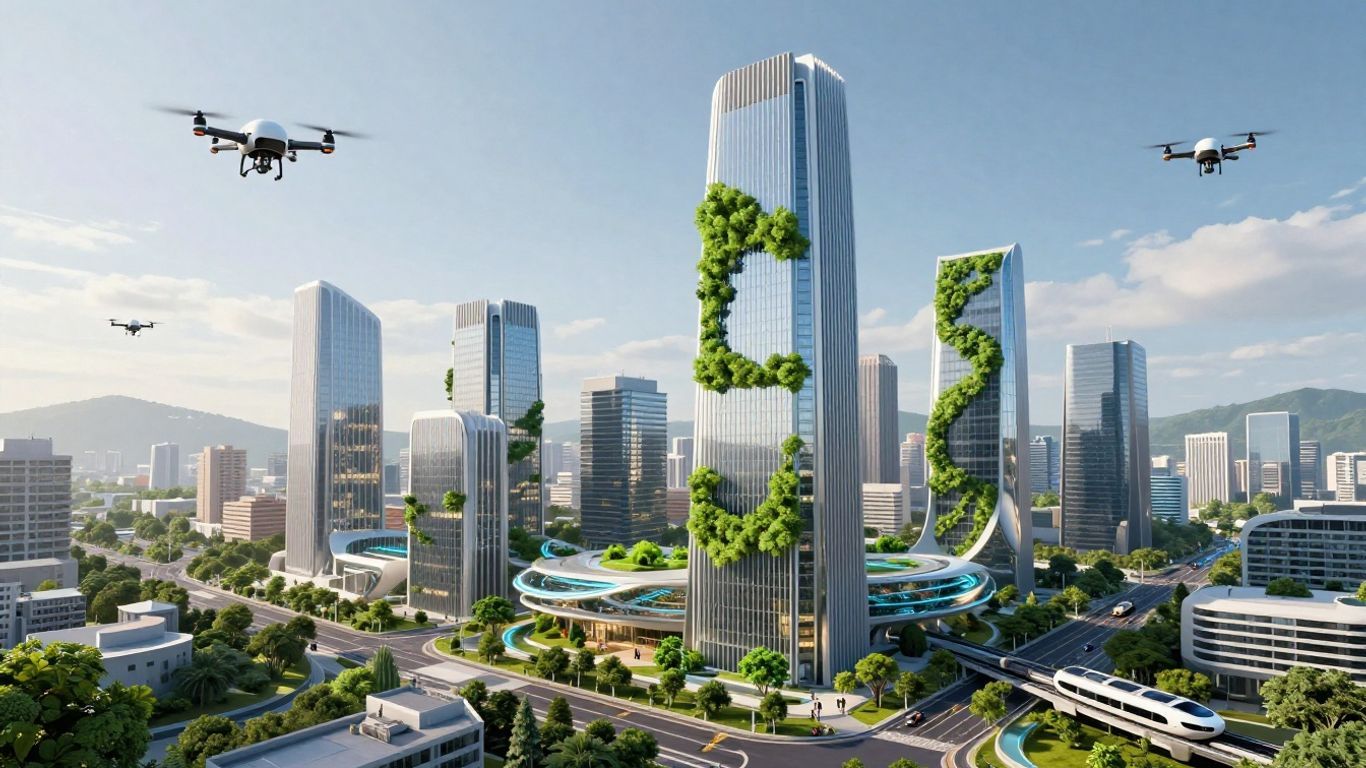
Acquisition of Desert Land for Future Development
Belmont didn't simply materialize out of thin air; its very foundation commenced with a significant land acquisition. Bill Gates' investment firm strategically acquired a vast expanse of desert land in Arizona. This wasn't merely about purchasing property; it was a calculated maneuver to secure the physical space indispensable for such an ambitious endeavor. One might conceptualize this as reserving a monumental canvas before an artist even begins to sketch. This substantial acquisition represents the initial, concrete step in bringing the vision of Belmont to life, furnishing the necessary acreage for a meticulously planned urban ecosystem.
Conceived as a Hub for Technological Integration
From its very inception, Belmont was envisioned as more than merely a residential locale. The core idea was to forge a city where technology is intricately woven into the fabric of daily life. This entails leveraging data and smart systems to manage resources with unparalleled efficiency, optimize transportation networks, and collectively enhance the ease of living for residents. The overarching goal—a vital one, wouldn't you agree?—is to construct a city capable of learning and adapting, responsively addressing the evolving needs of its inhabitants and the surrounding environment. Ultimately, it’s about crafting a functional, truly responsive urban space.
The Origins of the Belmont Project
The journey toward Belmont began with a distinct mandate: to build a city that would serve as a practical proving ground for novel urban concepts. This innovative approach permits extensive experimentation and the refined iteration of both technologies and planning strategies before they are widely disseminated. It presents a unique opportunity to discern optimal strategies and identify areas for improvement within a tangible, practical setting. The project aspires to demonstrate unequivocally that a city can be both technologically advanced and inherently sustainable, even within a challenging environment such as the desert. This singular focus positions Belmont as a distinctive experimental platform for the future of urban living.
Here's a look at the proposed phased development plan:
- Phase 1: Prioritizing the establishment of core infrastructure, encompassing digital networks and essential utilities.
- Phase 2: Initiating the development of initial residential and commercial areas.
- Phase 3: Implementing advanced technological integrations, such as autonomous systems and smart grids.
- Phase 4: Expanding essential community amenities and public services to support the burgeoning population.
Key Technologies Shaping Belmont's Future
Belmont, at its essence, transcends the mere construction of physical infrastructure like buildings and roads; it's fundamentally about cultivating a city that operates with unparalleled fluidity, powered by intelligent technology. The overarching objective is to render daily life notably easier, more connected, and highly efficient for every individual residing there. One might envision it as building a city from the ground up with sophisticated digital systems at its very heart, rather than merely appending them as afterthoughts.
Ubiquitous High-Speed Internet Connectivity
At the core of Belmont's design philosophy lies the meticulous plan for pervasive, high-speed internet connectivity. This extends far beyond the convenience of Wi-Fi in local cafes; it's about forging a foundational digital infrastructure that underpins every other function the city performs. This caliber of connectivity, in fact, facilitates capabilities such as real-time data sharing between critical city systems and its residents. How else could a city truly be "smart," after all?
Integration of Autonomous Vehicles
Belmont is anticipating a future where self-driving cars and other autonomous vehicles are ubiquitous. The city's architectural layout and infrastructure are being thoughtfully designed considering this future reality. This translates to specialized lanes, intelligent traffic management systems capable of seamless communication with vehicles, and robust charging infrastructure to support electric autonomous fleets—all designed to optimize movement and efficiency.
Advanced Renewable Energy Systems
Energizing a modern city necessitates substantial energy provisions, and Belmont is committed to achieving this sustainably. The plan incorporates advanced systems engineered to harness renewable sources, such as solar power, which is abundantly available across the Arizona landscape. These systems will be inherently intelligent, adept at efficiently managing energy flow; storing excess power; and distributing it precisely where, and when, it's needed most.
The city's infrastructure is being built to be adaptable—designed to evolve and expand as technology advances. This forward-thinking approach is pivotal in safeguarding Belmont against obsolescence as new innovations emerge, thus setting a new standard for urban living.
Here's a quick look at how these technologies might work in concert:
- Smart Grids: The city's power network will be intelligent, adept at managing energy distribution efficiently. It will seamlessly integrate renewable sources and dynamically adjust to fluctuations in power demand.
- IoT Sensors: Buildings, roads, and public areas will be equipped with sensors continuously gathering real-time data on traffic, air quality, and energy consumption. This data empowers more effective management of urban services.
- Centralized AI: A primary artificial intelligence system will synthesize all incoming sensor data. This crucial analysis aids in optimizing urban services, judiciously allocating resources, and bolstering public safety.
Why Arizona for Bill Gates' Smart City?
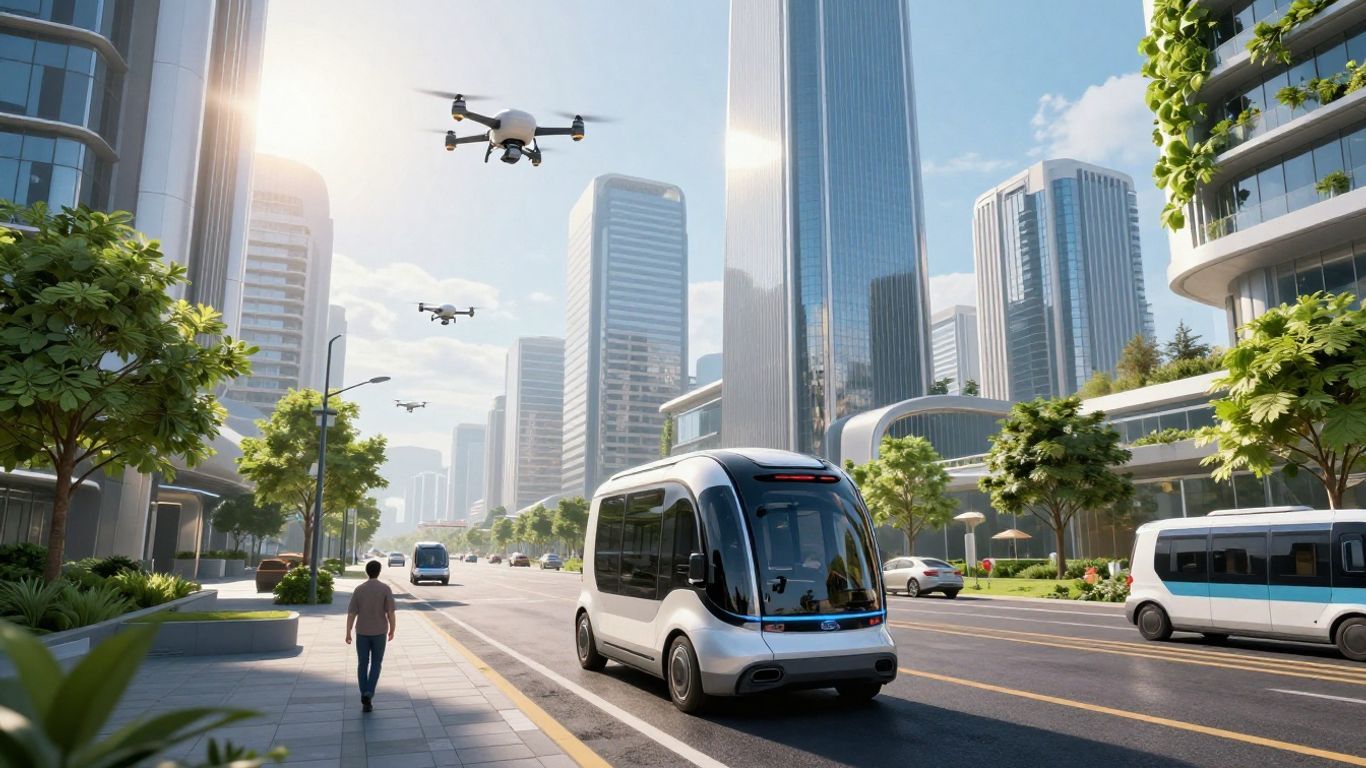
So, why did Bill Gates opt for Arizona for this ambitious Belmont project? It was by no means a random selection. Several compelling factors converge to make the Grand Canyon State a particularly well-suited location for constructing a city from the ground up, with technological innovation at its very foundation.
Abundant Open Land for Development
To begin with, there's the sheer vastness of available land. Arizona boasts expansive stretches of undeveloped territory, particularly within its desert regions. This presents a significant asset when planning to construct an entire city. Unlike the complexities of retrofitting an existing urban area, developers can commence with a clean canvas. This empowers a more integrated and logical urban layout from the very beginning, unburdened by the constraints of pre-existing infrastructure or dense populations. Consider the implications: 25,000 acres is an expansive acreage to work with, allowing for everything from residential and commercial zones to green spaces and advanced tech hubs.
Supportive Regulatory Environment for Innovation
Arizona has also been earning a reputation as a state highly receptive to innovation, particularly in the realm of technology. The state has proactively instituted policies designed to foster testing and development in cutting-edge areas such as autonomous vehicles. This kind of forward-thinking approach from the government can prove immensely beneficial for a project like Belmont, which relies heavily on pioneering technology. It effectively translates to mitigated regulatory hurdles and amplified opportunities to genuinely implement these novel systems.
Ideal Climate for Solar Energy Integration
Furthermore, Arizona benefits from an abundance of sunshine. The state receives a prodigious amount of solar radiation year-round. This climatic advantage is ideally suited for a smart city aspiring to robust sustainability. Solar power is a cornerstone of Belmont's energy plan, and having consistent, ample sunlight makes it a highly efficient and cost-effective choice. Imagine a city largely energized by the sun – it’s a pivotal aspect of the vision for a cleaner, more efficient urban future.
The strategic combination of readily available land, a welcoming attitude towards emergent technology, and a climate that's ideally suited for renewable energy sources makes Arizona a logical and compelling choice for a project as forward-looking as Belmont.
Belmont's Ambitious Goals and Potential Impact
Belmont transcends the simple act of constructing a new municipality; it's fundamentally about exploring pathways to enhanced urban living, particularly as global populations increasingly gravitate towards cities. This project stands as a tangible experiment, endeavoring to ascertain if technology can genuinely make urban areas function more smoothly, consume fewer resources, and simply cultivate more amenable environments. It's a significant undertaking, and even if it doesn't perfectly achieve the ideal city model, it offers us a compelling glimpse into what future cities might realistically entail.
Elevating Quality of Life Through Technology
The fundamental tenet behind Belmont is to leverage smart technology to enhance daily life and well-being for all its residents. Consider the potential for streamlined experiences with pervasive super-fast internet, self-driving cars that effectively mitigate traffic congestion, and clean energy powering every aspect of urban life. It’s ultimately about fostering a community where technology serves its inhabitants, rather than the other way around.
- Smart Homes: Residences capable of autonomously managing energy consumption and adapting to the evolving needs of residents.
- Connected Public Spaces: Parks and streets equipped with integrated sensors to bolster safety and enhance convenience.
- Personalized Services: Seamless access to city services and critical information through intuitive digital platforms.
The overarching goal is to create a place where technology proactively helps solve common urban headaches, thereby rendering life less stressful and markedly more efficient for its residents.
Addressing Modern Urban Challenges
Cities today contend with a myriad of contemporary challenges, including environmental pollution, persistent traffic congestion, and excessive energy consumption. Belmont is intentionally designed from its foundational elements to directly confront these issues head-on. By building with sustainability and efficiency at its core, it aims to demonstrate that new cities can be constructed in ways that are far more beneficial for both the environment and its inhabitants.
- Reduced Emissions: Leveraging renewable energy sources and efficient transportation systems to mitigate environmental pollution.
- Optimized Resource Use: Implementing smart systems to efficiently manage water and energy consumption.
- Improved Mobility: Integrating public transport and autonomous vehicle networks to significantly alleviate traffic congestion.
A Model for Future Urban Development
The outcomes observed in Belmont could provide an invaluable blueprint for how other cities are planned and constructed in the years to come. The lessons learned here—encompassing both the successes and the challenges encountered—will be profoundly beneficial for city planners and developers across the globe. It’s akin to developing a comprehensive playbook for building the cities of tomorrow.
Belmont aims to be a living laboratory, meticulously testing new ideas that could potentially be replicated or judiciously adapted elsewhere. This pioneering project could definitively show that it's feasible to construct a city that is simultaneously high-tech and environmentally harmonious, even within a challenging environment like the desert. The insights gained here could help shape urban living for decades to come, offering profound implications for global development.
Challenges and Considerations for Belmont
Navigating Water Scarcity in an Arid Climate
Constructing a city from the ground up in the Arizona desert inherently signifies that water is a paramount concern. One cannot simply assume an inexhaustible supply by turning on a tap. Belmont will necessitate highly innovative strategies for water management. Consider approaches such as comprehensive rainwater harvesting, advanced wastewater recycling, and the widespread adoption of water-efficient landscaping. The core objective is to minimize water consumption while simultaneously maintaining optimal urban functionality. This isn't merely about environmental stewardship; it's fundamental to sustainable habitation in an arid region.
Ensuring Data Privacy and Security
Smart cities, by their very nature, collect a wealth of information. Sensors, cameras, and an array of connected devices will be ubiquitous, continuously gathering data on everything from traffic flow to energy usage. While this data undeniably optimizes urban operations, it also prompts critical inquiries regarding access and protection. Belmont will require robust regulatory frameworks and advanced technological safeguards to protect sensitive personal data from unauthorized access or misuse. It's imperative that residents feel comfortable that their privacy is respected and vigilantly preserved.
Attracting Residents and Fostering Economic Growth
Indeed, even the most technologically advanced city requires a thriving populace and a vibrant business ecosystem to flourish. Enticing individuals to relocate to a brand-new locale, particularly one situated in the desert, necessitates compelling incentives. Belmont will need to offer promising employment opportunities, accessible housing, and an exceptional quality of life to genuinely draw people in. Furthermore, it must attract enterprises eager to participate in this new urban experiment. Without a sufficient base of residents and businesses, how can the city truly realize its envisioned potential?
Building a city like Belmont is a colossal undertaking. It extends beyond merely erecting structures and connecting them with technology. It's fundamentally about creating a place where people genuinely desire to live, work, and thrive, all while navigating the realities of the environment and the inherent complexities of modern technology. The success of Belmont could illuminate new paradigms for urban development, but the path forward undoubtedly presents some considerable obstacles.
Here are some of the key things Belmont needs to get absolutely right:
- Water Management: Pioneering advanced systems for water conservation, recycling, and optimized utilization.
- Data Protection: Enacting stringent security protocols to safeguard resident data and uphold individual privacy.
- Community Building: Cultivating an appealing environment that successfully attracts both inhabitants and enterprises, thereby fostering a vibrant economy.
Looking Ahead: What Belmont Means for Future Cities
So, what does Bill Gates' ambitious project in Arizona really signify for the future of urban living? Belmont is poised to offer a compelling glimpse into a future where elements like pervasive super-fast internet, self-driving vehicles, and widespread solar power are not merely conceptual, but integral to the city's operational fabric. The overarching philosophy is to construct a place that optimizes resource utilization and profoundly enhances the quality of life for its residents. Of course, there remain lingering questions regarding data privacy and the sheer volume of information that will be collected. But no matter the eventual outcome, Belmont stands as a monumental urban experiment. It's set to illuminate effective strategies and potential pitfalls when endeavoring to create new towns from scratch, particularly in challenging environments. Whether it ultimately serves as a model for others or a crucial lesson learned, it’s undoubtedly a development warranting close observation as it progresses.
Frequently Asked Questions
What is Bill Gates' new city project in Arizona called?
Bill Gates has an ambitious vision to build a brand-new city in the Arizona desert, and it's named Belmont. It's being designed as a pioneering smart city where advanced technology will be integral to every facet of its operation.
Why did they choose Arizona for Belmont?
Arizona was selected as a strategic location because of its abundant undeveloped land available for construction. Moreover, it boasts ample sunlight, making it perfect for solar power integration, and the state maintains a favorable regulatory environment for technological innovation, such as autonomous vehicles.
What kind of cool technology will be in Belmont?
Belmont is planned to feature pervasive high-speed internet connectivity. It's also poised to integrate autonomous vehicles for transportation and will substantially depend on clean energy, predominantly solar power, to sustain its operations.
What's the main goal of building Belmont?
The primary objective is to create a city that is both environmentally sustainable and leverages technology to significantly enhance the quality of life for its inhabitants. It's also intended to serve as an experimental hub for new urban ideas that could potentially be adopted globally.
How big is Belmont going to be?
The current plans envision Belmont spanning a substantial area of approximately 25,000 acres. It is anticipated to accommodate around 80,000 residences, alongside dedicated zones for businesses, retail establishments, and educational institutions.
What are some big challenges for building Belmont?
One of the foremost challenges is water management, given Arizona's arid desert climate. Innovative water conservation and management strategies will be crucial. Other significant challenges include attracting and retaining both residents and enterprises, and ensuring the city's sustainable growth and long-term viability.


