
innovation, resources
Jensen Huang And NVIDIA: Transforming AI And Computing
AI and high-performance computing,AI in healthcare and research,Autonomous vehicles and robotics,Jensen Huang NVIDIA,NVIDIA GPU AI,NVIDIA market expansion
18 Mar 2025

Jensen Huang, CEO of NVIDIA, has transformed the company from a gaming GPU manufacturer into a leader in AI and high-performance computing. Under his leadership, NVIDIA’s technology powers AI advancements in healthcare, autonomous vehicles, and robotics.
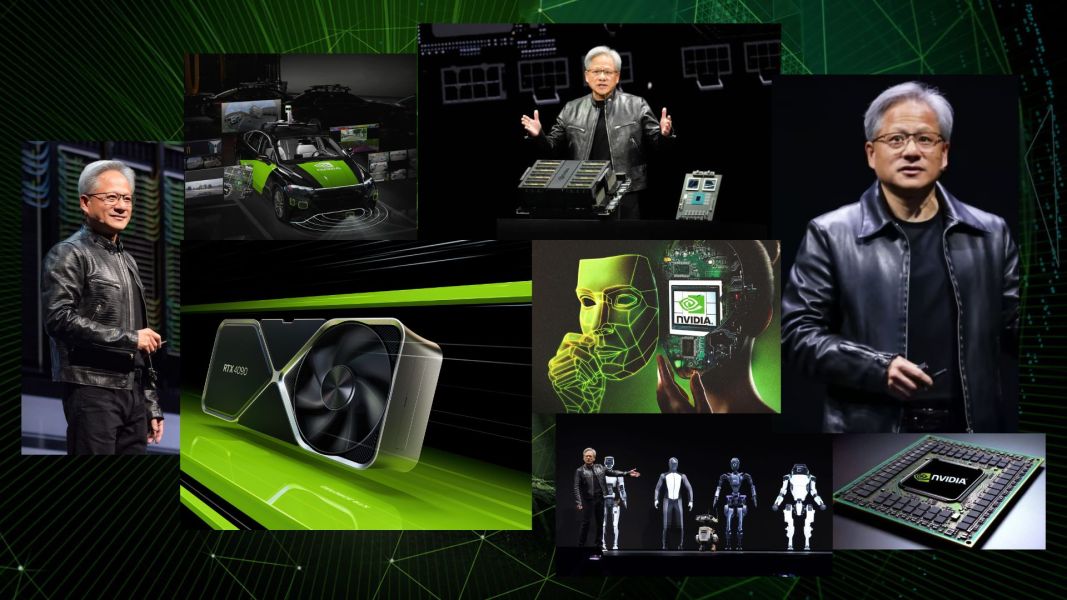
Jensen Huang, the co-founder and CEO of NVIDIA, has played a pivotal role in shaping the technology landscape of the 21st century. Under his leadership, NVIDIA has transitioned from a small startup to a key driver of artificial intelligence (AI), high-performance computing (HPC), and enterprise solutions.
Jensen has spoken about the power of technology to drive progress: “The most powerful technologies are the ones that empower others.”
NVIDIA was founded in 1993 by Jensen Huang, Curtis Priem, and Chris Malachowsky, initially focused on developing Graphics Processing Units (GPUs) for gaming and multimedia applications. The release of the GeForce 256 in 1999 marked a major milestone, introducing the world’s first GPU and setting new standards in graphics technology.
Huang has always emphasised the importance of continuous progress: “Success is a work in progress. It’s not about achieving a goal; it’s about constantly improving and pushing boundaries.”
The company’s next major milestone came in 2006 with the launch of CUDA (Compute Unified Device Architecture), a parallel computing platform that allowed GPUs to be used for more than just graphics. CUDA enabled acceleration in fields such as scientific computing, financial modelling, and deep learning. This transition from pure graphics processing to general-purpose computing paved the way for NVIDIA’s dominance in AI.
NVIDIA’s role in AI and data centres
Huang foresaw the increasing demand for AI computing and directed NVIDIA towards AI-driven solutions. The 2012 breakthrough in deep learning, where AlexNet, an image recognition model, leveraged NVIDIA GPUs, accelerated AI research and commercial adoption.
Jensen Huang reflected on the potential of AI, stating: “AI is moving at an unstoppable pace.”
NVIDIA’s expansion into AI was solidified by the introduction of Tensor Core GPUs, designed specifically for deep learning and machine learning applications. These chips enabled the training of complex AI models, such as OpenAI’s GPT-4 and DeepMind’s AlphaFold, which revolutionised fields like natural language processing and protein structure prediction.
Today, NVIDIA’s Compute and Networking segment, encompassing AI-related technology, has become the company’s largest revenue generator. The demand for AI GPUs has outstripped supply, making NVIDIA the go-to supplier for companies like Microsoft, Amazon, Meta, and Google. As of March 2025, NVIDIA’s market capitalisation stands at $2.968 trillion, underscoring its critical role in the global AI ecosystem.
“AI as a technology is complex, of course, but the capabilities and benefits of AI aren’t hard to understand.”
Huang believes that AI is more than just a technology—it is a tool for expanding human potential. He has highlighted its potential impact on fields as diverse as medicine, education, and engineering:
“We need artificial intelligence to help us explore the universe in places that we could’ve never done ourselves.”
NVIDIA’s impact on scientific research and healthcare
Beyond AI, NVIDIA’s technology has revolutionised scientific research. Huang’s vision extends to AI-driven simulations, robotics, and even climate modelling. In healthcare, AI-powered drug discovery has been accelerated by NVIDIA’s DGX SuperPODs and AI Factory models.
Reflecting on AI’s potential in medicine, Jensen has said: “AI is creating new proteins to fight diseases like cancer and asthma, even designing molecules that have never existed in nature.”
NVIDIA’s Clara platform is being used for AI-assisted diagnostics, improving early detection of diseases. In addition, researchers are using NVIDIA Omniverse, a real-time simulation platform, to create digital twins of cells and human organs for advanced medical studies.
Autonomous vehicles and robotics
Huang’s vision extends beyond computing into autonomous driving and robotics. NVIDIA’s DRIVE platform, launched in 2016, provides AI-based computing solutions for self-driving vehicles. Major automotive manufacturers, including Tesla, Mercedes-Benz, and Volvo, rely on NVIDIA’s chips for their autonomous vehicle technologies.
Commenting on the evolution of AI in robotics, Jensen stated: “AI and robotics will start doing more and more of what humans can do—and better.”
NVIDIA’s Isaac platform is accelerating the development of industrial and service robots, allowing machines to understand real-world physics, navigate autonomously, and interact with humans safely.
NVIDIA’s strategic acquisitions and market expansion
NVIDIA’s success is not only driven by in-house innovation but also through strategic acquisitions. In 2019, NVIDIA acquired Mellanox Technologies for $6.9 billion, strengthening its capabilities in high-speed networking essential for data centres.
“Smart people focus on the right things,” said Jensen.
More recently, Microsoft purchased 485,000 Hopper GPUs in 2025, doubling the orders of Meta and making it NVIDIA’s second-largest customer. This demand highlights NVIDIA’s critical role in AI infrastructure.
Jensen Huang’s leadership and vision for the future
Huang’s leadership style is defined by his commitment to research, strategic foresight, and adaptability. His ability to pivot NVIDIA towards AI, cloud computing, and robotics has cemented the company’s position at the forefront of technological innovation.
Reflecting on his leadership philosophy, Jensen Huang has emphasised: “True innovation requires taking risks and being willing to fail.”
His approach to business prioritises open collaboration, allowing developers and researchers worldwide to leverage NVIDIA’s platforms. He believes in empowering nations with sovereign AI capabilities and addressing industry challenges, such as AI’s high energy consumption, by developing more efficient computing systems.
Reflecting on how AI will shape the workforce, Huang acknowledges that some jobs will change but believes AI will create new opportunities: “There are some jobs that are going to become obsolete, but companies, when they become more productive, their earnings increase. I’ve never seen a company that had earnings increase and not hire more people.”
On AI’s role in education and learning, Huang has said: “I have [an AI] personal tutor with me all the time. That AI tutor can just teach you things—anything you like—help you program, help you write, help you analyse, help you think, help you reason.”
Jensen’s vision is clear: “Every day that goes by, AI technology is moving forward at an exponential rate. It’s very clear that AI is going to impact every industry.”
With a relentless drive for innovation and a deep understanding of market needs, Jensen and NVIDIA continue to push the boundaries of computing, ensuring that AI remains a force for progress and transformation across industries worldwide.
Jensen Huang’s philosophy on innovation and progress is deeply embedded in NVIDIA’s journey. His belief that, “Innovation is not about inventing something new, it’s about improving what already exists.”
His statement, “Embrace the unknown and embrace change. That’s where true breakthroughs happen,” captures the essence of NVIDIA’s risk-taking culture.
Jensen also values execution over mere ideas, as shown in his words, “The world needs more dreamers and doers, not just talkers.”
This principle is evident in NVIDIA’s rapid adaptation to market demands and its role in advancing AI applications, from healthcare and automation to the metaverse and robotics.


